What good is this information to you?
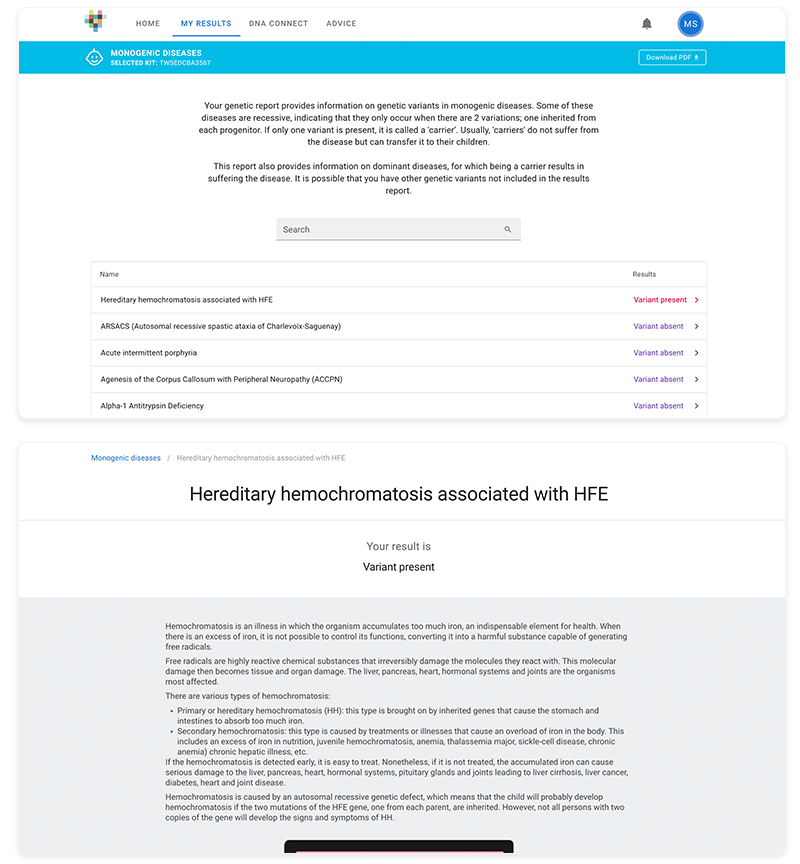
Your genetic report brings together information about your predisposition to health conditions, your response to medications, your traits, and your origins. It is information to know yourself better and share with your doctor. These reports are predictive and informative: they are not a diagnosis. This is how it can help you at every stage of life:
Children
Adults
Over 70 years
Knowing your genetics from the start. Information about your predisposition and traits, to discuss with your pediatrician when useful.
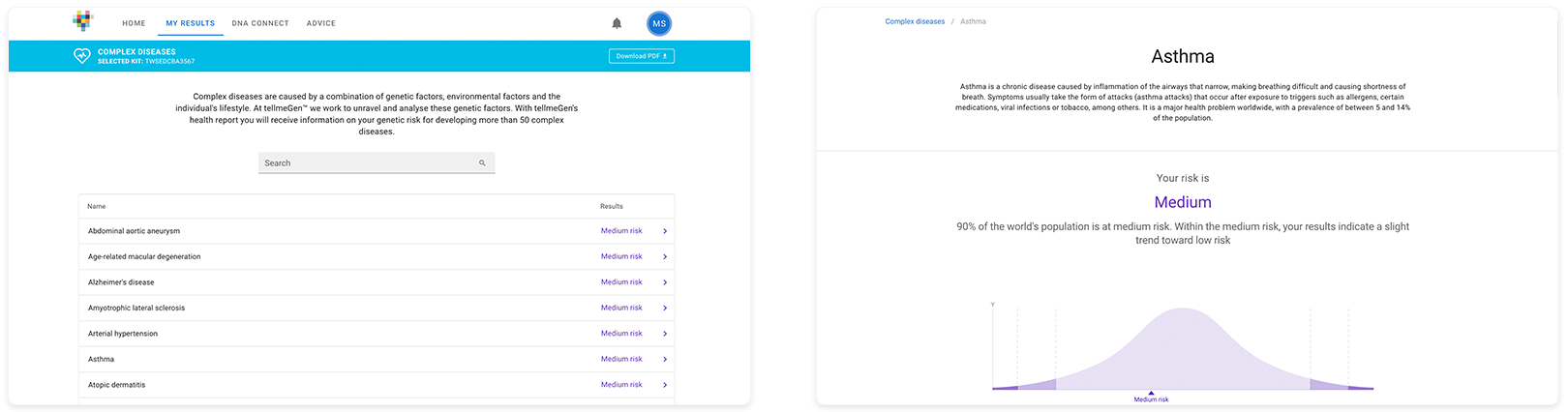
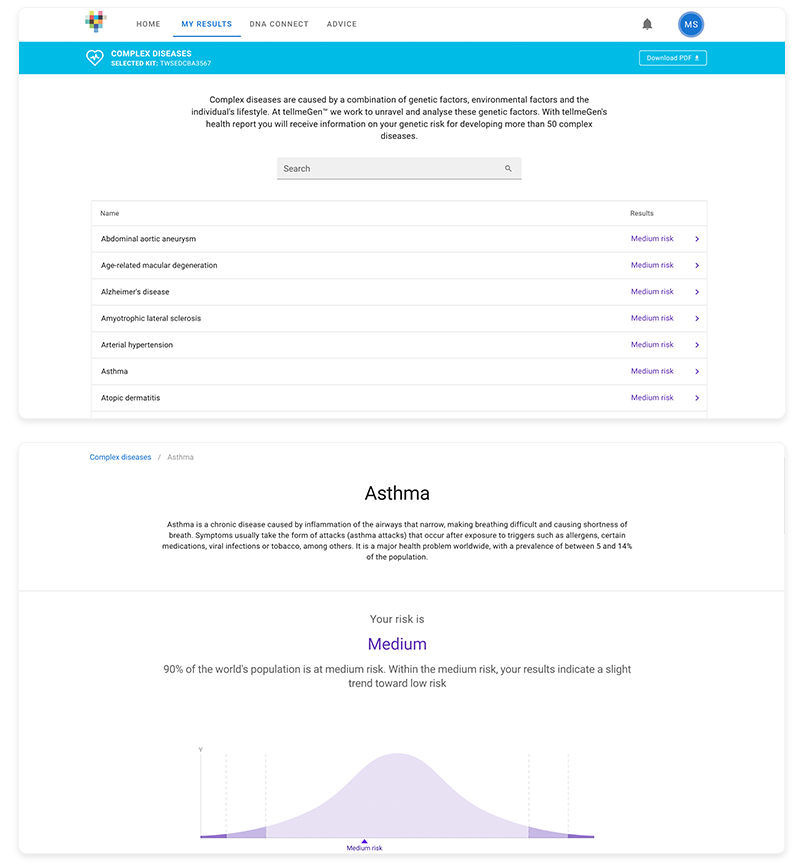
Knowing your predisposition. Knowing if your genetic vulnerability to a condition is higher than average allows you to talk to your doctor about check-ups and prevention.
Additional information for your doctor. Your genetic report can serve as additional information in your follow-up.
Discover its traits. What color will its hair be? Will it be an early riser? Discover the traits that make it unique.
Habits with more information. If your DNA makes you more vulnerable to a condition, you can discuss habit changes with your doctor. For example, if you have a greater vulnerability to skin cancer, take extreme sun protection measures.
Frequent conditions with age. Know your genetic vulnerability to conditions like macular degeneration, osteoporosis, or atrial fibrillation, to talk to your doctor about your check-ups.
Healthy habits from a young age. Knowing their genetic predisposition in nutrition and sport can help you, together with their pediatrician, to guide their habits.
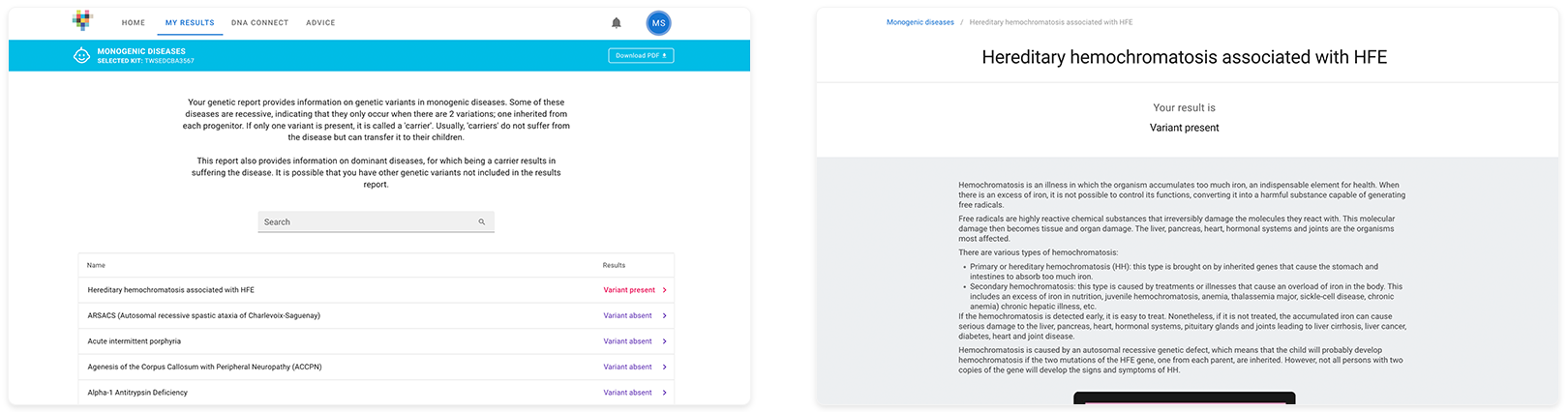
Planning a family. Knowing if you are a carrier of hereditary conditions allows you to evaluate it with your partner and with a genetic counseling specialist.
Follow-up with your primary care physician. Your results can be a supportive tool for more personalized follow-up.
You decide what to watch. Some reports are about adult conditions. You can keep them locked until your child can decide for themselves.
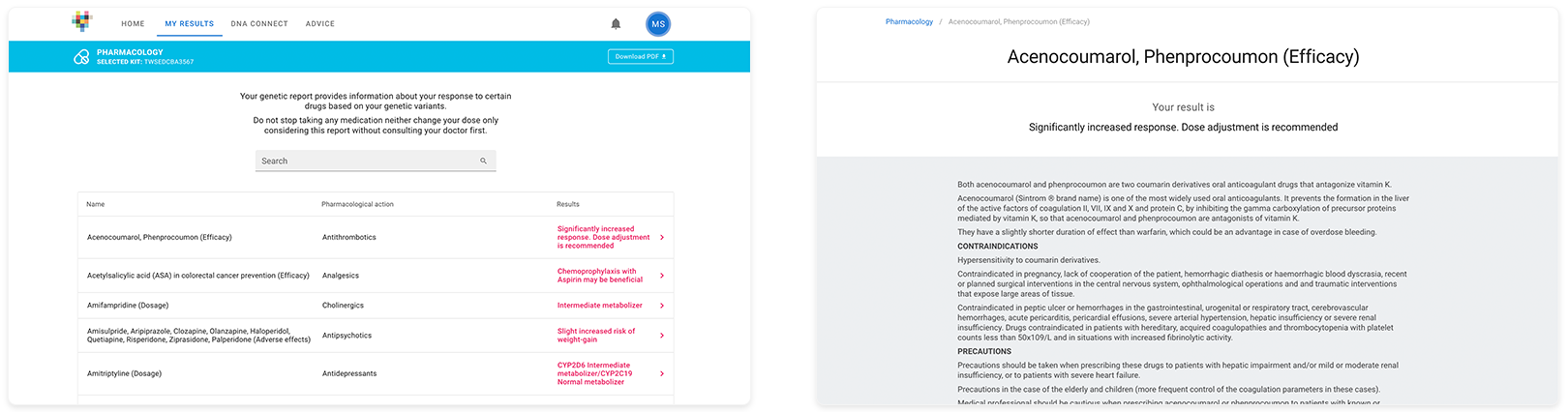
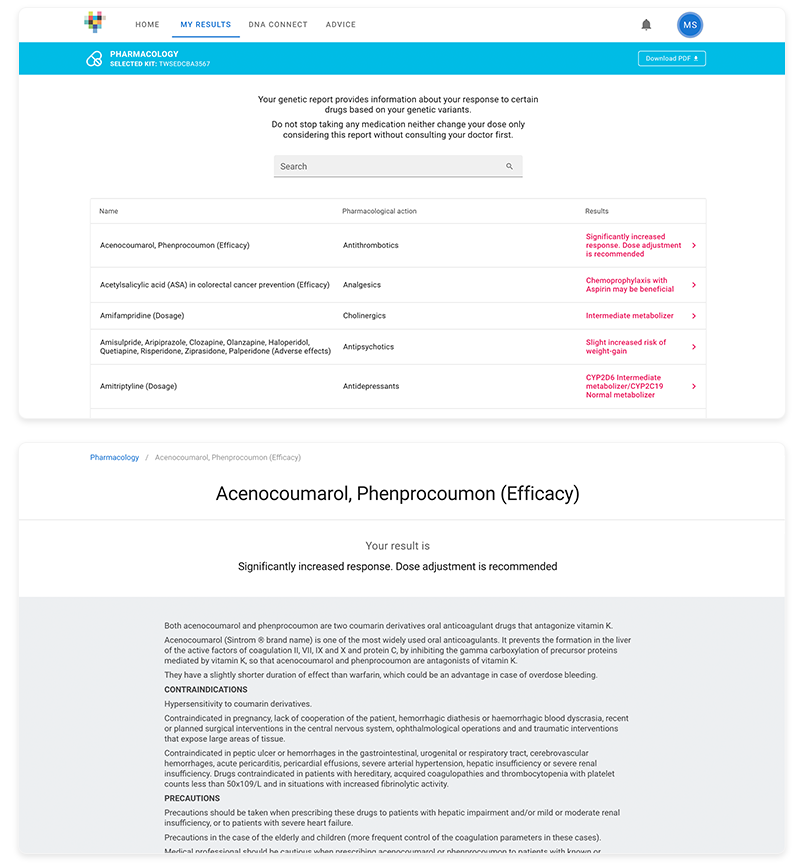
Pharmacogenetics for your doctor. How your genes can influence the dosage, efficacy, and adverse reactions of more than 100 medications. Never change a medication or its dosage on your own.
Pharmacogenetics when most used. With age it is common to take several medications: knowing your pharmacogenetics can be useful for your doctor. Never change a medication or its dose on your own.
Information that will accompany you throughout your life. Your genes do not change, and your results are updated with science.
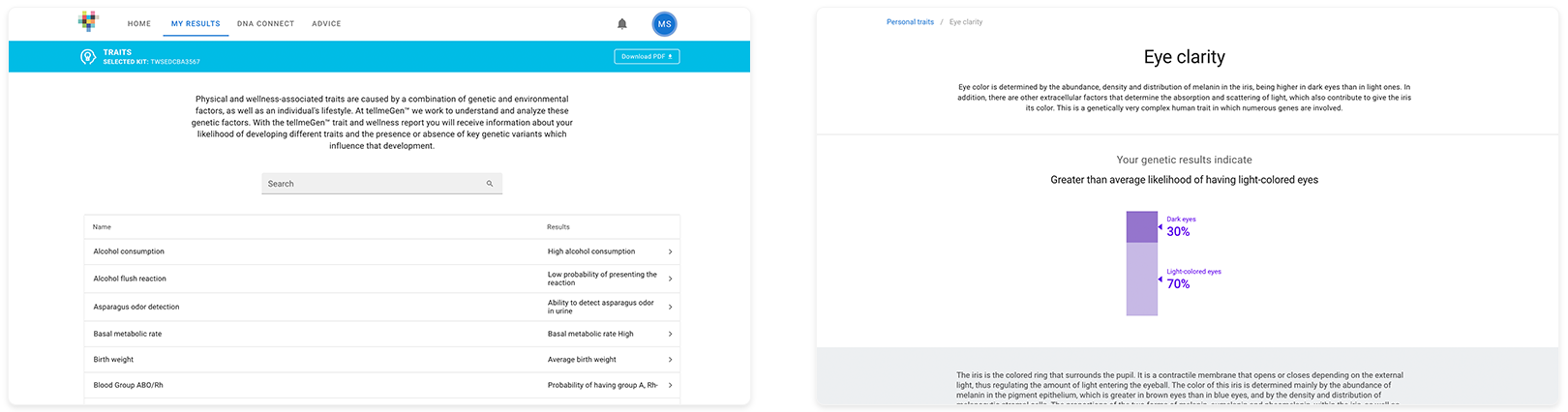
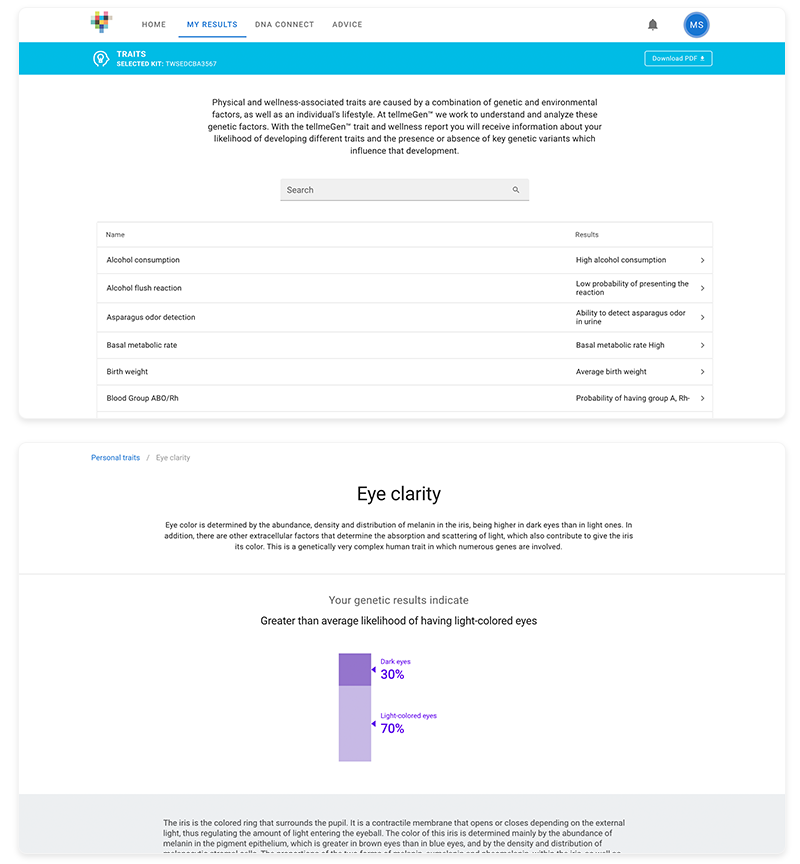
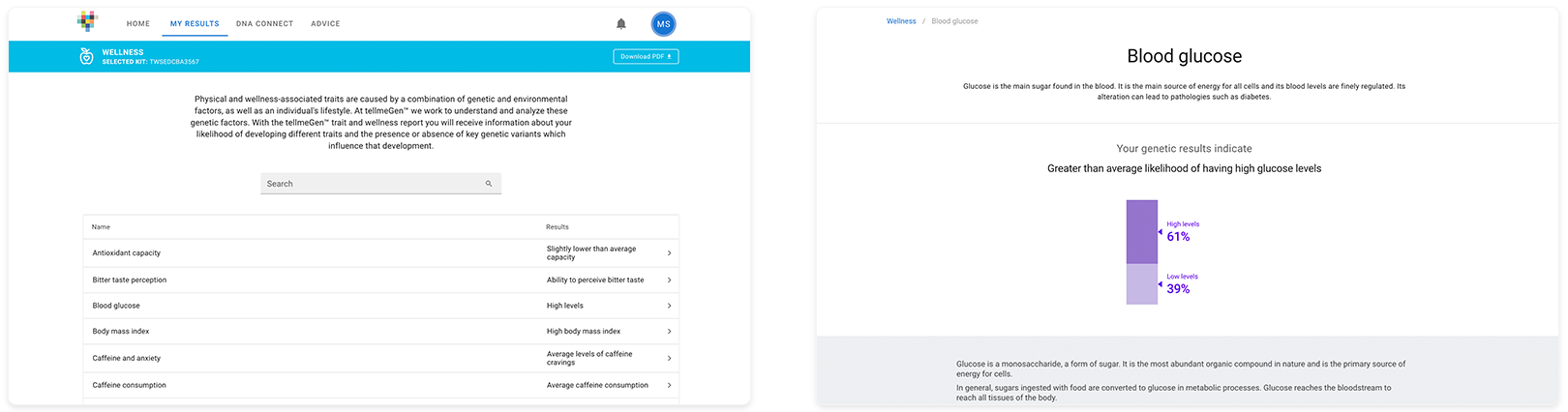
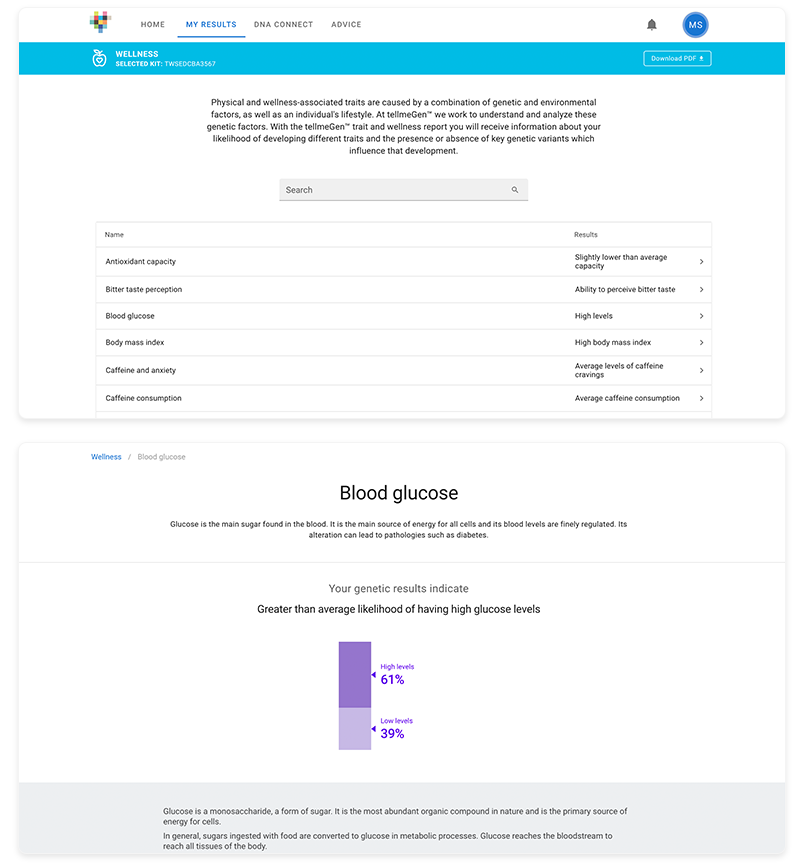
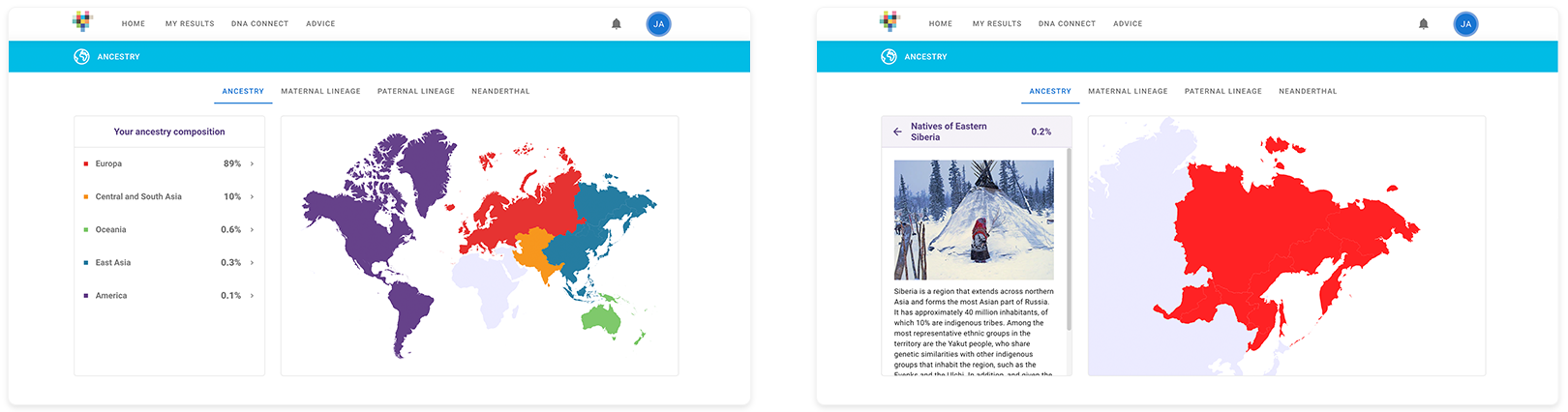
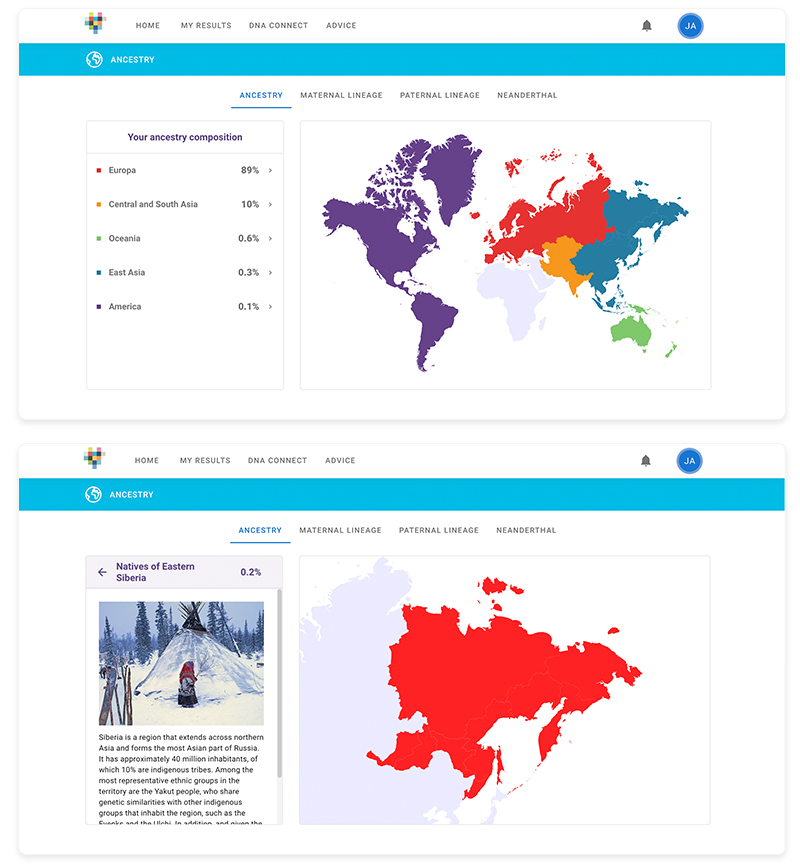
Getting to know you better. Why are you an early bird or why do you notice the bitter taste more? Your traits and your ancestry will help you get to know yourself even better.
Information for your family. If there are hereditary conditions in your family, your genetic information may also be useful for your children and grandchildren, with genetic counseling.
Pharmacogenetics for your pediatrician. Information on how your genetics can influence the response to some medications, so that your pediatrician can take it into account. Never change a medication or its dosage without consulting.
A step towards personalized medicine. Genetic information that you can share with your doctor whenever they need it.
A step towards personalized medicine. Genetic information that you can share with your doctor whenever they need it.
Help science. If, as its representative, you give your consent for research, your data, pseudonymized, can contribute to new discoveries.
Help science. If you consent to research, your data, pseudonymized, can contribute to new discoveries.
Help science. If you consent to research, your data, pseudonymized, can contribute to new discoveries.
Children
Knowing your genetics from the start. Information about your predisposition and traits, to discuss with your pediatrician when useful.
Discover its traits. What color will its hair be? Will it be an early riser? Discover the traits that make it unique.
Healthy habits from a young age. Knowing their genetic predisposition in nutrition and sport can help you, together with their pediatrician, to guide their habits.
You decide what to watch. Some reports are about adult conditions. You can keep them locked until your child can decide for themselves.
Information that will accompany you throughout your life. Your genes do not change, and your results are updated with science.
Pharmacogenetics for your pediatrician. Information on how your genetics can influence the response to some medications, so that your pediatrician can take it into account. Never change a medication or its dosage without consulting.
Help science. If, as its representative, you give your consent for research, your data, pseudonymized, can contribute to new discoveries.
Adults
Knowing your predisposition. Knowing if your genetic vulnerability to a condition is higher than average allows you to talk to your doctor about check-ups and prevention.
Habits with more information. If your DNA makes you more vulnerable to a condition, you can discuss habit changes with your doctor. For example, if you have a greater vulnerability to skin cancer, take extreme sun protection measures.
Planning a family. Knowing if you are a carrier of hereditary conditions allows you to evaluate it with your partner and with a genetic counseling specialist.
Pharmacogenetics for your doctor. How your genes can influence the dosage, efficacy, and adverse reactions of more than 100 medications. Never change a medication or its dosage on your own.
Getting to know you better. Why are you an early bird or why do you notice the bitter taste more? Your traits and your ancestry will help you get to know yourself even better.
A step towards personalized medicine. Genetic information that you can share with your doctor whenever they need it.
Help science. If you consent to research, your data, pseudonymized, can contribute to new discoveries.
Over 70 years
Additional information for your doctor. Your genetic report can serve as additional information in your follow-up.
Frequent conditions with age. Know your genetic vulnerability to conditions like macular degeneration, osteoporosis, or atrial fibrillation, to talk to your doctor about your check-ups.
Follow-up with your primary care physician. Your results can be a supportive tool for more personalized follow-up.
Pharmacogenetics when most used. With age it is common to take several medications: knowing your pharmacogenetics can be useful for your doctor. Never change a medication or its dose on your own.
Information for your family. If there are hereditary conditions in your family, your genetic information may also be useful for your children and grandchildren, with genetic counseling.
A step towards personalized medicine. Genetic information that you can share with your doctor whenever they need it.
Help science. If you consent to research, your data, pseudonymized, can contribute to new discoveries.